CONTEXT: India’s Energy & Climate Commitments
India’s Paris Agreement Pledge (2015)
Under the Paris Climate Agreement, India committed to:
- Reducing emissions intensity of GDP by 33-35% by 2030 (from 2005 levels).
- Achieving 40% of its installed electricity capacity from non-fossil fuel sources by 2030 (later enhanced to 50%).
- Creating an additional carbon sink of 2.5 to 3 billion tonnes of COz equivalent.
This 50% capacity goal was part of the revised Nationally Determined Contribution (NDC) updated in 2022
WHAT HAS BEEN ACHIEVED ?
As of 30 June 2025, India has
- Total installed power generation capacity: 484.8 Gw
- Non-fossil fuel capacity: 242.8 GW(50%)
Composition of Non-Fossil Fuel Capacity:
Source Capacity (GW) Share of Total Capacity
Renewable energy 184.6 GW 38.1%
Hydro 49.4 GW 10.2%
Nuclear 8.8 GW 1.8%
Total 242.8 GW 50%
Fossil Fuel-Based Capacity:
- Mainly coal (200+ GW), gas, and diesel
- Still critical for baseload and grid stability
HOW DID INDIA ACHIEVE THIS EARLY?
01. Aggressive Renewable Deployment
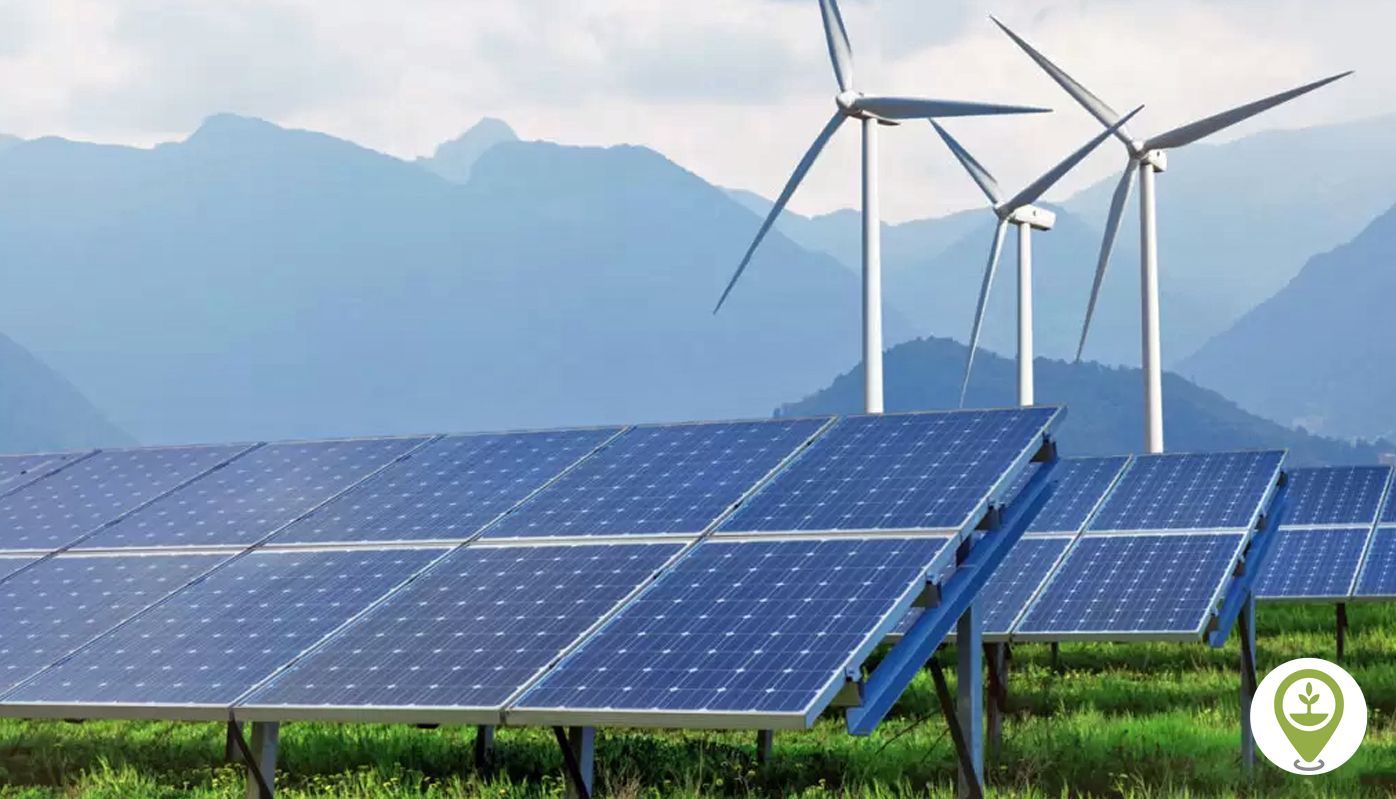
- India added 16.3 GW of solar and wind capacity in H1 2025
- In 2024, it added 28 GW of renewable energy-more than any previous year.
- June 2025 alone: 7.3 GW (5.4 GW solar + 1.4 GW wind) added.
02. Policy & Schemes Support
- Solar Parks, VGF schemes, grid parity measures
- PM-KUSUM Scheme – solar pumps for farmers
- PM Surya Ghar Yojana – rooftop solar for residential users
- Green Open Access Rules 2022 – allowed large users to buy green power
- Production-Linked Incentive (PLl) schemes for solar module manufacturing
03. State and Private Sector Push
- States like Gujarat, Rajasthan, Tamil Nadu led in renewables
- Major private investments: Adani, Tata Power, ReNew, Greenko
- Global investment inflows into India’s green economy
WHY THIS IS HISTORIC
Global Recognition
- India is the third-largest emitter, but now among the fastest decarbonizers in capacity.
- Shows commitment to its energy transition, especially ahead of COP30 in Brazil(2025)
Helps Reduce Import Dependency
- Less reliance on coal and oil imports
- Better energy security, especially during geopolitical disruptions (Russia-Ukraine, Red Sea crisis)
CAVEATS & REALITY CHECK
Installed Capacity t Actual Power Generation
- Despite 50% capacity, non-fossil fuels generate only ~25% of actual electricity.
- Solar/wind have low capacity utilization (PLF ~20-25%)
- Coal still generated ~72% of India’s electricity in 2024
Coal is Still Expanding
- India plans to add 80 GW of new coal capacity by 2032
- To meet peak power demands
- Due to renewable intermittency (no sun/wind all the time)
- Delays in energy storage deployment
Grid Integration Challenges
- Transmission lines, storage, grid stability lag behind
- India needs massive investment in battery storage, pumped hydro, and smart grids
ROAD AHEAD (2030 Targets)
Target Status
500 GW of non-fossil capacity 242.8 GW done (on track)
50% electricity from non-fossils Only ~25% currently
Net zero by 2070 Long-term vision
To convert this capacity success into generation success, India must:
- Scale up green hydrogen
- Strengthen transmission infrastructure
- Incentivize energy storage
- Increase rooftop and distributed solar
- Improve DISCOM financial health
GLOBAL COMPARISON
Country Renewable Share of Capacity Renewable Share of Generation
India 50% ~25%
China 51% ~32%
USA ~45% ~22%
EU (avg.) ~60% ~39%
India’s pace in scaling renewables is among the fastest globally, even though generation still lags.