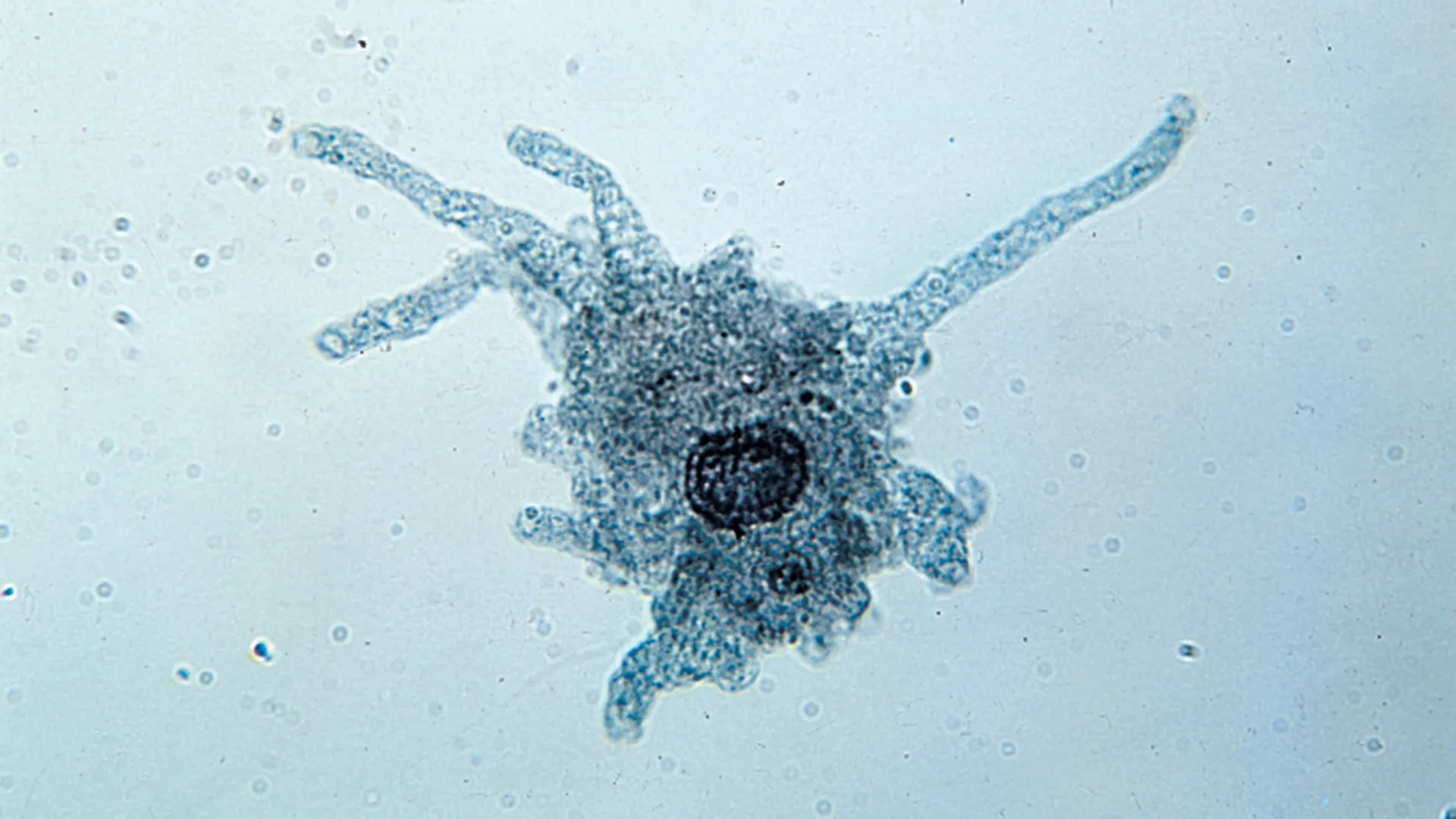
Current Situation in Kerala
- Kerala has reported around 69 confirmed cases of Naegleria fowleri infection in 2025, with 19 deaths so far.
- The infection is known as Primary Amoebic Meningoencephalitis (PAM) — extremely rare but highly fatal.
- Unlike global trends (~97% fatality), Kerala has achieved improved survival (~24%) due to early detection and aggressive treatment.
The Organism & Infection Route
- Causative agent: Naegleria fowleri, a free-living amoeba.
- Habitat: warm freshwater — ponds, lakes, rivers, hot springs, untreated wells, and poorly maintained swimming pools.
- Mode of infection:
- Water containing the amoeba enters the nose, often during swimming, bathing, diving, or nasal cleansing.
- The amoeba travels along the olfactory nerves, crosses the skull base (cribriform plate), and reaches the brain.
- Not transmitted by: drinking contaminated water or human-to-human contact.
- Incubation period: 1-9 days before symptoms appear.
Clinical Features
Early symptoms (resemble viral/bacterial meningitis):
- Severe headache
- Fever
- Nausea and vomiting
- General malaise
Progressive symptoms (neurological):
- Stiff neck
- Confusion and disorientation
- Seizures
- Hallucinations
- Loss of balance
- Coma and rapid deterioration
Diagnosis
- CSF (cerebrospinal fluid) analysis:
- High neutrophil count (like bacterial meningitis)
- High protein, low glucose
- Wet-mount microscopy: motile amoebic trophozoites sometimes visible.
Definitive tests:
- PCR on CSF/tissue
- Immunofluorescence assays
- Culture in specialized labs
Key challenge: PAM is often mistaken for bacterial/viral meningitis unless clinicians suspect it after
recent freshwater exposure
Treatment
- No guaranteed cure — survival remains rare globally.
- Medications tried:
- Amphotericin B (IV + sometimes intrathecal)
- Miltefosine (an anti-parasitic showing promise in survivors)
- Rifampicin, azithromycin, fluconazole
- Supportive measures: aggressive ICU care, controlling intracranial pressure.
- Kerala’s outcome: some improvement in survival due to early use of miltefosine + supportive care
Public Health Response in Kerala
Government actions:
- Regular chlorination of swimming pools, tanks, and wells.
- Testing community water sources
- Public advisories on safe bathing practices
- Rapid referral protocols to tertiary hospitals with diagnostic capacity
Pattern of cases:
- Cases are sporadic across districts in 2025, not confined to one outbreak.
- Affected population: all age groups (infants to elderly).
Prevention Measures
For Individuals:
- Avoid swimming or diving in warm, stagnant freshwater.
- Use nose clips or keep head above water when swimming
- Do not use tap or well water for nasal rinsing/neti pots unless it is:
- Boiled and cooled, or
- Distilled/sterile, or
- Properly filtered.
- Maintain private water tanks and ensure regular cleaning + chlorination .
For Communities/Policy:
- Routine chlorination of public water bodies and wells .
- Awareness campaigns to explain nasal route of infection.
- Strengthened surveillance & diagnostics at district and tertiary hospital levels.
Research & Challenges
- Why hard to control: amoeba naturally occurs in freshwater — cannot be fully eliminated.
- Research focus;
- Rapid diagnostics (PCR, point-of-care tests)
- Development of new anti-amoebic drugs.
- Clinical protocols for aggressive therapy
- Kerala’s uniqueness: proactive detection and management have improved survival, making it a case study for other regions.
CONCLUSION
- Rare but deadly: Naegleria fowleri infection is almost always fatal if untreated.
- Kerala alert: ~69 cases, 19 deaths in 2025 so far.
- Survival possible: Early diagnosis + aggressive therapy (miltefosine, amphotericin B, supportive care) are critical.
- Best defense: Prevention through safe water practices and strong public health measures.