WHAT’S HAPPENING?
Bangladesh has witnessed a disturbing surge in mob violence, particularly involving lynching incidents, amid political instability and social unrest. Within a span of days in December 2025, two Hindu men were lynched, triggering regional concern, minority insecurity, and diplomatic ripples with India.
These incidents are occurring at a time when law-and-order mechanisms are under strain, protests are widespread, and mob justice is increasingly replacing institutional justice.
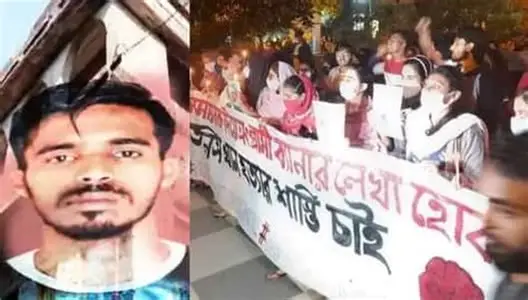
Case l: Lynching of Dipu Chandra Das
Key Facts
- Age & Occupation: 27 years old; garment factory worker
- Location: Bhaluka area, Mymensingh district, Bangladesh
- Date: 18 December 2025
What Happened
- Das was accused by co-workers of making blasphemous remarks.
- A mob gathered rapidly and assaulted him brutally.
- After his death:
- His body was tied to a tree
- Set on fire in public
- The act was filmed and circulated, amplifying outrage.
Significance
- Blasphemy accusations have historically acted as flashpoints for mob violence.
- The public burning of the body marked an extreme escalation in brutality.
- Sparked nationwide fear among religious minorities, particularly Hindus.
Case Il: Lynching of Amrit Mondal (Samrat)
Key Facts
- Age: Approximately 29-30 years
- Religion: Hindu
- Location: Pangsha area, Rajbari district
- Date: Night of 24-25 December 2025
What Happened
- Mondal was accused by villagers of attempting extortion.
- Locals raised alarms calling him a “robber””.
- A mob:
- Beat him severely
- Police intervened and hospitalised him.
- He succumbed to injuries shortly after.
Hours after a citizen belonging to Bangladesh’s minority religious population was lynched to death by an angry mob on Wednesday (December 24, 2025), the interim government in Dhaka said that the matter was”unfortunate”but added that it was “not at all acommunally motivated incident”.
In a press release, the interim administration“strongly condemned” the killing but said that a”particular segment” was trying to project the incident as a “communal attack”.
From the information provided by the police and from preliminary investigation, it appears that it was not at all a communally motivated attack. It is related to extortion and terrorist activities.
The person killed is top terrorist Amrit Mandal, Samrat who came to the area seeking money and died after clashes with the angry local people, “said a press statement by the interim government of Bangladesh.
Why This Claim Is Highly Controversial
Violation of Due Process
- Even if allegations were true, mob lynching is illegal
- The state alone has the authority to investigate, arrest, and prosecute
- Suggesting justification after death undermines rule of law
Perceived Victim-Blaming
- Human rights groups argue that :-
- Labeling the victim posthumously shifts blame
- It dilutes responsibility of attackers
- It discourages accountability
Minority Rights Concerns
- Bangladesh’s Hindus have historically faced:
- Targeted violence during political transitions
- Attacks following rumours of blasphemy or political alignment
- Displacement and intimidation
The government’s statement reinforced fears that minority lives are politically expendable during instability
Pattern of Mob Violence in Bangladesh
This lynching is not an isolated incident. Recent trends show:
- Increase in mob killings over alleged blasphemy
- Attacks triggered by social media rumours
- Weak police intervention during large gatherings
Structural reasons:
- Politicisation of law enforcement
- Fear of confronting large mobs
- Breakdown of intelligence-sharing at local levels
Minority Safety Concerns
- Hindus form ~8% of Bangladeshi’s population
- Recent incidents have revived fears of:
- Religious profling
- Collective punishment
- Lack of swift justice
- Civil society groups warn of normalisation of violence against minorities
Regional and International Reactions
India’s Response
- Protests outside the Bangladesh High Commission in New Delhi
- India expressed concern over:
- Minority safety
- Misinformation in Bangladeshi media
- Political leaders across parties condemned the kilings
Diplomatic Sensitivity
- Bangladesh rejected some Indian media narratives
- Situation adds strain to India-Bangladesh relations
What This Incident Symbolises
The kiling of Dipu Chandra Das has become a symbol of three overlapping crises in Bangladesh.
1. Governance Crisis – Weak state authority
2. Communal Vulnerability – Minorities at risk during unrest
3. Justice Crisis – Normalisation of mob punishment