WHAT HAPPENED?
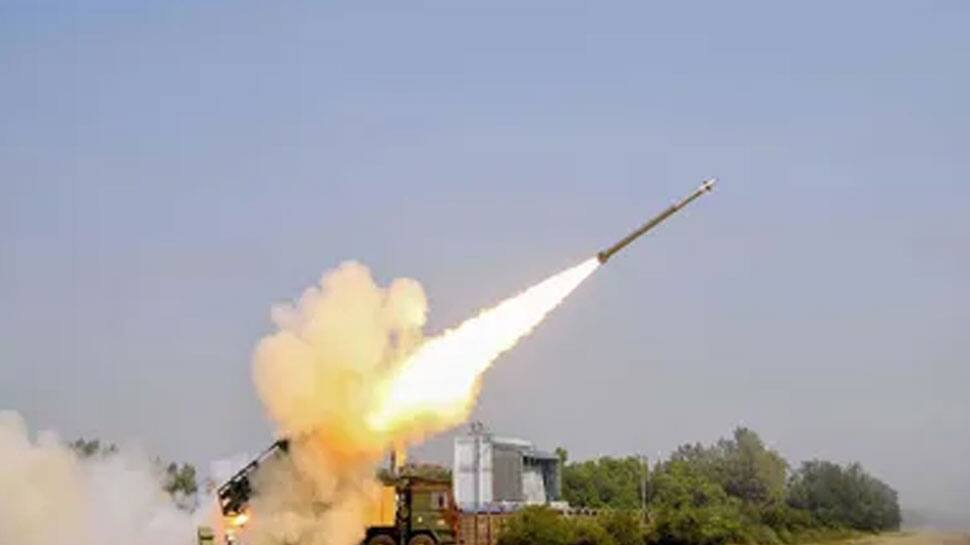
DRDO successfully test-fires drone-launched missile
India’s Defence Research and Development Organisation (DRDO) has successfully conducted a test of a drone-launched missile.
The UAV-Launched Precision Guided Missile(ULPGM-V3)-on July 25, 2025, at the National Open Area Range (NOAR) in Kurnool, Andhra Pradesh.
This marks a major leap in India’s unmanned aerial warfare and precision strike capabilities, and is part of DRDO’s broader push
towards indigenization and autonomous defense systems.
What is ULPGM-V3?
The UAV-Launched Precision Guided Missile (ULPGM-V3) is a next-generation anti-armour and tactical strike missile designed to be launched from Unmanned Aerial Vehicles (UAVs), This version (V3) represents an advanced, third-generation variant, integrating enhanced guidance, range, and kill probability features.
Key Specifications:
Feature Details
Platform Designed for launch from UAVs
Guidance System Precision-guided (likely laser, electro-optical or GPS)
Target Capability Armoured vehicles, enemy bunkers, high-value targets
Range (est.) Several kilometres, depending on altitude of launch
Warhead Likely tandem HEAT (High Explosive Anti-Tank)
Weight Lightweight enough for UAV carriage and launch
Accuracy (CEP) Circular Error Probable of < 1 meter (very precise)
Why Launch from a Drone?
Launching missiles from drones provides the following strategic advantages:
1. Stealth and Safety: Drones can operate without risking pilot lives, especially in contested airspaces.
2.High Precision: The missile can be laser-guided or GPS-steered onto target with very little collateral damage.
3. Mobility: UAVs can hover or loiter over an area, identifying the right moment to strike.
4. Real-time Intelligence: Drones can first survey and identify targets, then fire immediately.
- This fits into India’s push for manned-unmanned teaming (MUM-T) in the future battlefield, a concept being embraced globally (especially by the US and China)
Importance of the Test at Kurnool, Andhra Pradesh
Location: NOAR (National Open Area Range), Kurnool
- This is a secure missile and UAV test site developed by DRDO, offering long range visibility, telemetry, and instrumentation for real-time performance evaluation.
Nagayalanka Missile Range (Future Expansion)
- Located in Krishna District, Andhra Pradesh
- Announced in Oct 2024 and foundation stone laid in April 2025 by PM Narendra Modi
- Will be India’s third major missile testing facility (after Chandipur and Wheeler Island in Odisha)
- Capable of handling long-range air-to-surface and surface-to-air missiles
- Key to testing systems under India’s Ballistic Missile Defence (BMD) Phase Il
Strategic Implications
Boosts Indigenous Capabilities
- ULPGM-V3 is fully designed and developed in India, aligning with Atmanirbhar Bharat and Make in India policies.
- Reduces dependence on imports from countries like Israel (e.g, Spike ATGMs) and the US (e.g, Hellfire)
Enhances India’s Drone Warfare Capabilities
- India has been developing its own armed drones (e.g, Rustom, Tapas-BH, and plans for Ghatak stealth UCAV). This missile provides lethal payload options for these platforms.
Enables Pre-emptive and Surgical Strikes
Drones carrying ULPGM can be used in:
- Counter-insurgency (J&K, Northeast)
- Cross-border strikes (similar to Balakot airstrikes)
- Line of Actual Control (LAC) and LoC precision deterrence
Global Context – How India Compares
Country Drone Strike Capability
USA MQ-9 Reaper, Predator (pioneered drone warfare)
Israel Heron TP, Harop – used in Gaza and Lebanon
China CH-4, Wing Loong – exported to Pakistan and Gulf nations
Turkey Bayraktar TB2 – effective in Libya, Syria, Azerbaijan-Armenia war
India Now joins this elite group with indigenous systems
India previously relied on Israeli Heron drones for surveillance but had to depend on foreign support for armed drone missions. That gap is now closing.
Industrial Ecosystem Backing
The DRDO test is part of a larger industrial revolution in defense R&D
- In 2024 alone, DRDO transferred over 2, 000 technologies to private industries.
- Over 130 industrial partners are engaged in co-production.
- Over 200 production licenses have been granted to Indian startups and MSMEs.
- Focus is shifting toward public-private partnerships, with Bharat Dynamics, Tata Advanced Systems and Adani Defence involved in UAV and missile systems.
Related Developments by DRDO (2025)
Weapon System Status/Highlights
ASTRA Mk2 (BVRAAM) Successfully tested with indigenous RF seeker from Su-30 MKI in July 2025
VL-SRSAM Conducted naval trials for ship-based air defense
VSHORAD Man-portable SAM system inducted into Army
Pralay tactical missile Under limited series production; for deployment in Eastern sector
MPATGM (Man-Portable ATGM) Cleared final developmental tests in early 2025
Future Development Path
India will likely pursue:
- Full-scale weaponization of Tapas-BH and upcoming Ghatak UCAV (Unmanned Combat Air Vehicle)
- Swarm drones with AI for coordinated attacks
- Loitering munitions (e.g. ALFA-S) that hover and strike at the right time.
- Export of armed drones to friendly countries in Asia and Africa