Context
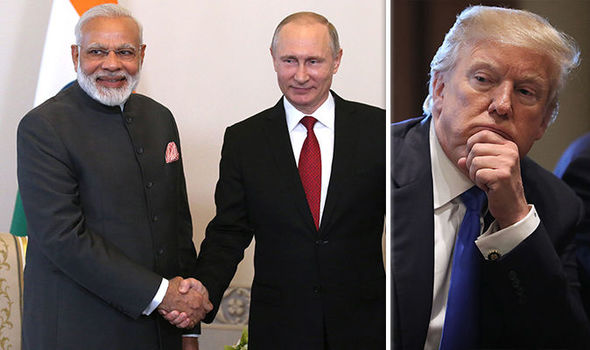
- Peter Navarro, senior trade adviser to U.S. President Donald Trump, recently sparked controversy by declaring that the Ukraine conflict is effectively “Modi’s war.”
- His remarks linked India’s purchases of discounted Russian crude oil directly to the continuation of Russia’s war in Ukraine.
- This came alongside Washington’s decision to double tariffs on Indian goods to 50%, with a conditional offer: tariffs could be reduced by 25% if India stopped buying Russian oil.
WHAT HE SAID
“India can get 25% off tomorrow if it stops buying Russian oil and help in defeating the war machine. Instead of siding with democracies, you are getting in bed with authoritarians. You have been in a quiet war with China for decades. China
invaded Aksai Chin and all your territory, They are not your friends. And Russia?Come on!” Navarro further said.
Navarro also underscored that the path to peace in Ukraine “runs, in part, through New Delhi”. “I mean, it is essentially Modi’s war because the road to peace runs, in part, through New Delhi, ” he said.
“I’m puzzled. Because Modi is a great leader. This is a matured democracy with matured people running it, ” he said.
“What’s troubling to me is that the Indians are so arrogant about this. They say ‘Oh, we don’t have higher tariffs. Oh, it’s our sovereignty, We can buy oil from anyone we want, ” Navarro said as quoted by Bloomberg.
Navarros Core Argument
Navarro’s logic chain rests on four key claims:
1. Russia funds its war largely through oil exports.
2. India is among the largest buyers of Russian discounted oil.
3. By buying this oil, India indirectly prolongs the conflict.
4. Therefore, it is justified to call the conflict “Modi’s war” and to pressure India using trade measures.
He also accused India of being “arrogant” and urged it to “act like the biggest democracy in the world.”
India’s Position & Response
- Energy Security First: India’s Ministry of External Affairs called (Navarro’sremarks “extremely unfortunate.”
- It argued that India’s decisions are market-driven, ensuring affordable energy for 1.4 billion people
- Purchases are conducted within international frameworks, including G7/EU price-cap rules where applicable.
- India emphasized that other nations also bought Russian energy, making U.S. accusations one-sided
Why Navarros Logic is Criticized
A. Oversimplification
- Russia earns from multiple buyers (China, Turkey, others).
- Blaming India alone ignores wider global demand dynamics.
B. Legal & Practical Realities
- India insists it is not violating international law and that affordable energy is a sovereign necessity.
C. Lim its of Sanctions
- G7/EU price-cap enforcement is imperfect.
- Russia continues to export via alternative shipping and non-Western financial systems.
D. Political Rhetoric
- Critics view “Modi’s war” as inflammatory and politically motivated.
- Analysts note Navarro’s framing is reductive and risks harming strategic ties.
Economic Fallout of Tariffs
- Sectors hit: Labour-intensive Indian exports (garments, footwear, chemicals, engineering goods).
- Risk of diversion: U.S. buyers may shift orders to Vietnam or Bangladesh.
- Backfire potential: Tariffs hurt Indian exporters more than Russian revenues. They could also raise global oil prices if India’s supply chain is disrupted.
Geopolitical Implications
- US-India Relations: Trust between the two may weaken. Strategic cooperation under the Quad and Indo-Pacific frameworks could suffer.
- Russia’s Alternatives: Russia can stil sell to China, Turkey, and others.
- Global Markets: Cutting India from discounted oil could spike crude prices, triggering global inflation hurting both India and U.S.consumers.
Balanced Assessment
- Where Navarro is Correct:
- Oil revenues are central to Russia’s war economy.
- Large buyers like India reduce the impact of Western sanctions.
- Where Navarro Overreaches:
- Calling the conflict “Modi’s war” is an exaggeration.
- India is one actor in a complex, multi-player energy market.
- Tariffs target Indian exporters but do not directly stop Russian oil sales.
Possible Future Scenarios
1. Diplomatic compromise: India offers symbolic reductions in Russian purchases; U.S. rolls back tariffs
2. Trade escalation: Tariffs stay; India retaliates diplomatically; trade ties deteriorate.
3. Energy shock: Stricter sanctions or forced pivots could drive global crude prices sharply upward.